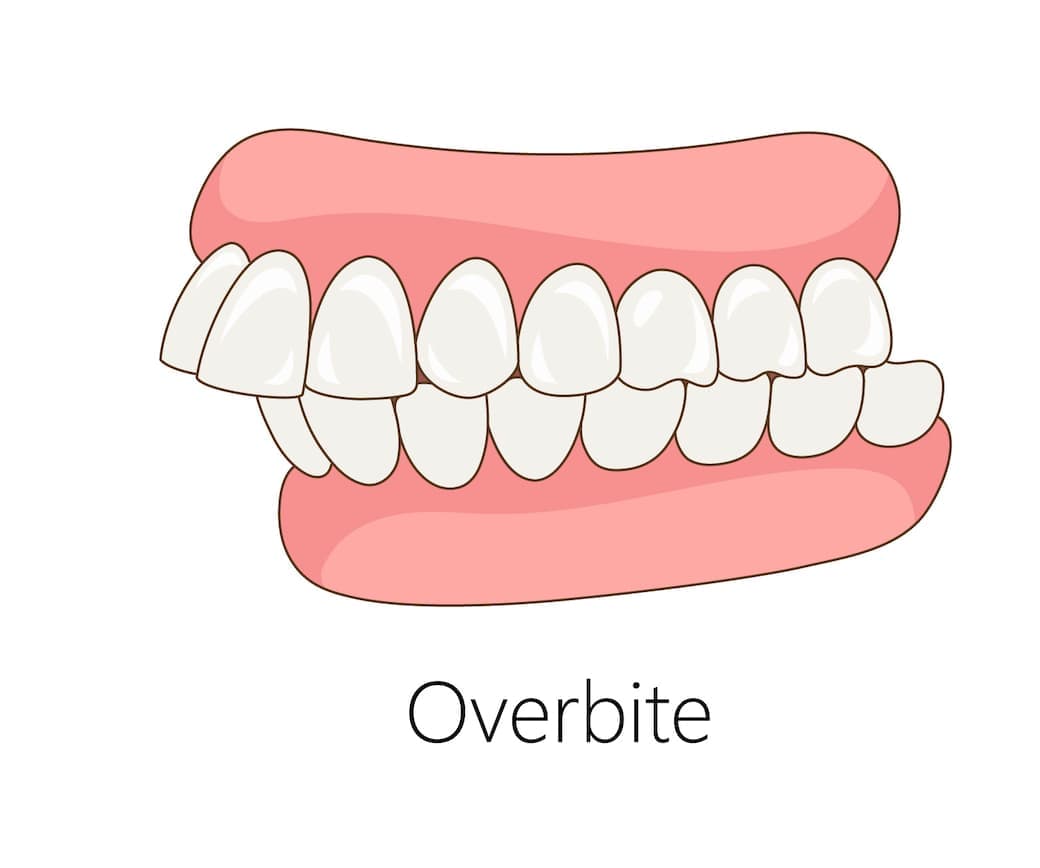
An overbite is one of the most common types of dental misalignment. It occurs when the upper front teeth overlap the lower front teeth vertically by more than is considered normal. Almost everyone has a slight degree of overlap, and this is perfectly healthy. However, when the overlap becomes excessive, it is classified as an overbite and can lead to functional, aesthetic, and long-term dental concerns.
Overbite teeth alignment issues are seen in both children and adults and can develop for a range of reasons, from genetics and childhood habits to tooth loss and jaw growth imbalances. Whether mild or severe, an overbite is treatable — and understanding the condition is the first step toward effective correction.
This guide covers everything you need to know about overbites: what they are, what causes them, the symptoms to watch for, and the full range of treatment options available — from monitoring and early intervention to braces, Invisalign, and more advanced orthodontic approaches.
Overbite vs Normal Bite — What's the Difference?
In a normal, well-aligned bite, the upper front teeth sit slightly in front of the lower front teeth with a small degree of vertical overlap. This is the natural resting position and allows for comfortable biting, chewing, and speaking. The upper teeth typically overlap the lower teeth by around 2–4mm — this is considered healthy and does not require treatment.
The overbite vs normal bite difference becomes significant when the vertical overlap exceeds what is considered functional. A deep overbite condition develops when the upper front teeth cover a large proportion of the lower front teeth — in some cases, the lower teeth may be almost entirely hidden behind the upper teeth when the mouth is closed.
At this stage, it is no longer simply a cosmetic concern. A significant overbite can cause real overbite jaw problems, including strain on the temporomandibular joints, difficulty chewing effectively, and increased wear on certain teeth.
| Classification | Vertical Overlap | Characteristics |
|---|---|---|
| Normal Bite | 2–4mm | Upper teeth slightly overlap lower teeth; comfortable bite function; no treatment needed |
| Mild Overbite | 4–6mm | Noticeable overlap; may not cause immediate symptoms; monitoring recommended |
| Severe Overbite | 6mm+ | Significant overlap; lower teeth may contact the gum; active treatment typically recommended |
What Causes an Overbite?
Overbites can develop in childhood or adulthood, and the underlying causes differ depending on the patient's age. In many cases, more than one factor contributes to the condition.
Overbite in Children
- Thumb sucking — Prolonged thumb sucking places persistent forward pressure on the upper front teeth and backward pressure on the lower front teeth, gradually increasing the vertical overlap as the jaw develops
- Prolonged dummy use — Extended use of a dummy beyond the recommended age can have a similar effect to thumb sucking, influencing the position of the front teeth and the development of the palate
- Genetics — Jaw size and shape are largely inherited. A child may develop an overbite simply because the upper and lower jaws are naturally different sizes, causing the upper teeth to sit further forward or overlap more deeply
Overbite Causes in Adults
- Tooth loss — Missing back teeth remove the support that keeps the bite stable. Without these teeth, the remaining teeth can shift and the bite can deepen over time, worsening any existing overbite
- Teeth grinding (bruxism) — Chronic grinding wears down the biting surfaces of the back teeth, reducing their height and allowing the front teeth to overlap more significantly
- Jaw growth imbalance — In some adults, the upper jaw is naturally larger or more prominent than the lower jaw, causing the upper teeth to sit well ahead of the lower teeth and creating a pronounced overbite
Key point: Whether an overbite develops in childhood or adulthood, it is treatable. Understanding the underlying cause helps guide the most effective correction approach.
Signs and Symptoms of an Overbite
The effects of an overbite can be both functional and aesthetic. Some patients are aware of the visual appearance first, while others notice functional bite problems before anything else.
Functional Symptoms
- Overbite bite problems — The teeth may not come together evenly, making it difficult to bite cleanly into food. This is especially noticeable with harder or crunchier foods
- Chewing difficulty — An uneven bite places excessive strain on certain teeth during chewing, which can cause discomfort and reduce chewing efficiency over time
- Speech problems — A pronounced overbite can affect the way certain sounds are formed, particularly “s”, “f”, and “th” sounds, potentially resulting in a lisp or unclear pronunciation
- Jaw discomfort — The misalignment caused by an overbite can strain the jaw joints and muscles, leading to aching, clicking, or tension — particularly after eating or during times of stress
- Tooth wear — When the bite is unbalanced, certain teeth bear disproportionate force, leading to premature wear, chipping, or even fractures
Aesthetic Concerns
- Overbite side profile — A significant overbite can be visible from the side, with the upper jaw and teeth appearing more prominent than normal, affecting the overall facial profile
- Chin appearance — In some cases, an overbite can cause the chin to appear recessed or set back, creating an imbalance between the upper and lower thirds of the face
- Facial changes — Over time, a deep or severe overbite can contribute to a shortened lower face appearance, with the lower lip appearing to sit further back than expected
How Is an Overbite Diagnosed?
Diagnosing an overbite involves a thorough clinical dental examination. Your dentist will assess the relationship between your upper and lower teeth and evaluate how your jaws come together when you bite down naturally.
The assessment typically includes:
- Visual bite assessment — Observing how the upper and lower teeth meet when the mouth is closed to identify the degree of vertical overlap
- Measurement of vertical overlap — Precisely measuring the distance the upper front teeth cover the lower front teeth to classify the overbite as mild, moderate, or severe
- Overbite teeth alignment evaluation — Assessing the alignment and positioning of individual teeth to determine whether the overbite is dental (caused by tooth position) or skeletal (caused by jaw discrepancy)
- Jaw positioning assessment — Evaluating the relationship between the upper and lower jaws to identify any underlying overbite jaw problem contributing to the condition
Important for children: Early assessment of an overbite in children is valuable. Identifying the condition during jaw development allows for timely intervention and may simplify treatment later. A child's bite should be assessed at routine dental check-ups.
Management and Treatment Options for Overbite
Overbite orthodontic treatment varies depending on the severity of the condition, the underlying cause, and the patient's age. How dentists fix overbite depends on whether it is a dental overbite (caused by tooth position) or a skeletal overbite (caused by jaw size discrepancy). In both cases, effective correction is achievable.
Monitoring & Early Intervention
For mild overbite correction, particularly in children whose jaws are still growing, active monitoring may be the first step. Regular assessments allow the dentist to track jaw development and intervene at the optimal time if the overbite worsens. Growth guidance techniques can sometimes harness natural jaw development to reduce the severity of the overbite without extensive treatment.
Early orthodontic assessment for overbite in children is recommended, as timely intervention during growth can produce results that would be more difficult to achieve once the jaw has fully developed.
Active Orthodontic Treatment
For moderate to severe cases, active treatment is typically required. Can an overbite be fixed? Yes — and the following approaches are the most widely used for overbite correction:
- Braces for severe overbite — Fixed braces use brackets, archwires, and elastics to reposition the teeth and correct the bite relationship. They are effective for all severities, including deep overbite and severe overbite treatment, and allow precise control over tooth movement. Can an overbite be fixed with braces? Absolutely — braces remain one of the gold-standard treatments for overbite correction
- Invisalign for overbite correction — Clear aligners such as Invisalign can correct mild to moderate overbites using a series of custom-made removable trays. They are a popular option for patients seeking a more discreet treatment experience, though they may not be suitable for all overbite cases
- Bite-correcting elastics — Orthodontic elastics are frequently used alongside braces or aligners to apply directional forces that help close the overbite. Consistent wear as directed is essential for effective results
- Orthodontic appliances — Additional appliances such as bite plates, Herbst appliances, or twin blocks may be used in conjunction with braces to guide jaw positioning and accelerate overbite correction, particularly in growing patients
Note: In rare, severe skeletal overbite cases that cannot be fully corrected with orthodontics alone, corrective jaw surgery may be considered alongside orthodontic treatment. This is always a last resort, and your dentist will explore all non-surgical options first.
Untreated Overbite Complications
While a mild overbite may not cause immediate problems, leaving a moderate to severe overbite untreated can lead to a range of complications that worsen progressively over time. Understanding these untreated overbite complications underlines why early assessment and timely intervention are important.
- Accelerated tooth wear — An unbalanced bite causes certain teeth to bear excessive force, leading to premature wearing down of the enamel, chipping, and potential fractures
- Gum recession and damage — In deep overbite cases, the lower front teeth may contact the gum tissue behind the upper front teeth, causing irritation, inflammation, and recession over time
- Jaw strain and TMJ discomfort — Chronic overbite jaw problems can lead to pain, clicking, or locking in the temporomandibular joints, affecting daily comfort and jaw function
- Tension headaches — The muscle strain associated with a poorly aligned bite can contribute to recurring headaches, particularly around the temples and jaw area
- Speech and chewing difficulty — Overbite speech problems and chewing difficulty can worsen over time, affecting nutrition, confidence, and quality of life
- Worsening alignment — Without treatment, a deep overbite condition can continue to worsen as teeth shift and the bite deepens further, making eventual correction more complex
Key takeaway: The longer an overbite goes untreated, the greater the risk of complications. Early assessment does not commit you to treatment — it simply gives you a clear understanding of your options.
Braces vs Invisalign for Overbite Correction
Two of the most common overbite orthodontic treatment options are fixed braces and Invisalign clear aligners. Both can achieve excellent results, but they differ in suitability, visibility, and the types of overbite they can correct effectively.
| Factor | Fixed Braces | Invisalign |
|---|---|---|
| Suitability | All severities including severe overbite | Mild to moderate overbite cases |
| Visibility | Visible brackets and wires (ceramic options available) | Nearly invisible clear trays |
| Removable | No — fixed throughout treatment | Yes — removed for eating and cleaning |
| Precision | High — fine control with wires and elastics | Good — effective for planned tooth movements |
| Compliance needed | Minimal — always working | High — must be worn 20–22 hours per day |
| Best for | Complex, deep, or severe overbite correction | Discreet correction of mild to moderate overbite |
Which is right for you? Your dentist will recommend the most suitable option after a clinical assessment. In some cases, braces may be clearly more appropriate (for example, braces for severe overbite), while in others, Invisalign for overbite correction may achieve the desired result with greater discretion.
Overbite Before and After — What to Expect
Patients who complete overbite treatment can expect to see meaningful improvements across several areas. While every case is unique, the following changes are commonly observed:
- Bite balance — The vertical overlap between the upper and lower teeth is reduced to a healthy range, restoring even contact and comfortable function
- Functional improvement — Patients often report a noticeable improvement in their ability to bite and chew food comfortably, along with reduced jaw strain
- Smile alignment — Correcting the overbite creates a more balanced, harmonious smile with the upper and lower teeth in improved proportion
- Overbite facial changes — Some patients notice subtle improvements in their side profile and chin appearance as the bite is corrected, though individual results vary
Please note: Overbite before and after outcomes vary by individual. Results depend on the severity of the starting condition, the treatment method used, and the patient's compliance with the treatment plan. No specific cosmetic outcome can be guaranteed. Results are discussed realistically during your consultation.
When Should You See a Dentist About an Overbite?
If you are experiencing any of the following, it is worth having your bite assessed by a qualified dental professional:
- Pain or discomfort in the jaw, particularly during or after eating
- Difficulty biting into or chewing food comfortably
- Speech concerns such as a lisp or difficulty with certain sounds
- Visible excessive overlap of the upper front teeth over the lower teeth
- Cosmetic concerns about your side profile, chin appearance, or smile
- Signs of tooth wear, chipping, or gum recession
- A child or teenager showing signs of an overbite developing
At St Paul's Medical & Dental, our experienced GDC-registered dental team offers thorough bite assessments at our private dentist in the City of London practice. We will evaluate your bite, explain your options clearly, and create a personalised treatment plan if correction is needed.
How to Prevent Overbite From Developing or Worsening
While some overbites are genetic and cannot be entirely prevented, there are practical steps that can reduce the risk of an overbite developing or becoming more severe over time:
- Early dental check-ups — Regular dental visits from a young age allow your dentist to monitor jaw development and identify any developing overbite in children at the earliest stage
- Monitoring jaw development — For children with a family history of overbite, ongoing monitoring helps ensure timely intervention if the bite starts to change
- Avoiding prolonged thumb sucking — Gently discouraging thumb sucking and extended dummy use beyond the recommended age can help support healthy tooth and jaw development
- Managing grinding habits — If you grind your teeth, addressing this early — often with a nightguard — can prevent the back teeth from wearing down and the overbite from deepening. This is one of the most important preventable overbite causes in adults
- Replacing missing teeth promptly — When back teeth are lost, replacing them helps maintain bite stability and prevents the remaining teeth from shifting in ways that can worsen an overbite
Good to know: Some overbites are strongly genetic and develop regardless of preventive measures. However, early identification and care can reduce the severity and simplify future treatment when it is needed.
Frequently Asked Questions About Overbite
Can an overbite be fixed?
Yes. An overbite can be fixed at any age using a range of orthodontic approaches. Mild overbite correction may involve monitoring and simple orthodontic adjustments, while more significant cases may require fixed braces, clear aligners, or bite-correcting appliances. The most suitable method depends on the type and severity of the overbite.
How to correct overbite?
An overbite is corrected through orthodontic treatment that repositions the teeth and, where necessary, guides the jaw into improved alignment. Treatment options include fixed braces, Invisalign clear aligners, bite-correcting elastics, and orthodontic appliances. Your dentist will recommend the most appropriate approach after a thorough clinical assessment.
Can an overbite be fixed with braces?
Yes. Braces are one of the most effective treatments for correcting an overbite. Fixed braces use brackets, wires, and elastics to move the teeth into improved positions and adjust the bite relationship. They are suitable for all severity levels, including deep overbite and severe overbite cases.
Is a deep overbite serious?
A deep overbite can be a concern if left untreated. It can lead to excessive tooth wear, damage to the gum tissue behind the upper front teeth, jaw discomfort, and headaches. The longer a deep overbite goes unaddressed, the greater the risk of complications. Early assessment allows for timely intervention.
Does overbite affect facial appearance?
Yes, an overbite can influence the appearance of the face, particularly the side profile. A significant overbite may cause the chin to appear set back or the lower face to look shorter than normal. Correcting an overbite through orthodontic treatment can improve facial balance and profile harmony, though individual results vary.
What happens if overbite is untreated?
An untreated overbite can lead to a range of complications over time, including accelerated tooth wear, chipping or fractures, gum recession and damage, jaw pain and TMJ discomfort, tension headaches, speech difficulties, and worsening bite alignment. Addressing an overbite early can help prevent these issues from developing.
How long does overbite treatment take?
Treatment duration depends on the severity of the overbite and the method used. Mild cases may be corrected in a shorter timeframe, while severe overbite treatment with braces or surgery may take longer. Your dentist will provide a realistic estimate based on your individual case during your consultation.
Concerned About an Overbite?
If you think you or your child may have an overbite, our experienced GDC-registered dental team at St Paul's Medical & Dental can help. We offer thorough clinical assessments and clear, honest advice on the most effective treatment options for your individual case.








