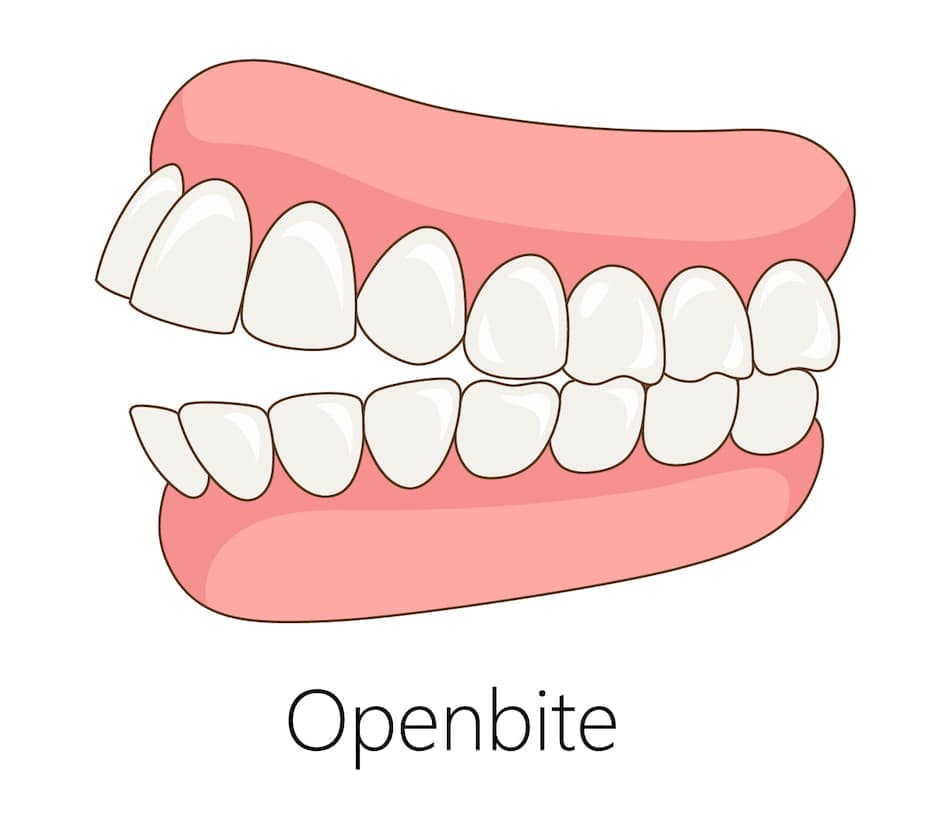
An open bite is a common orthodontic condition where the upper and lower teeth do not come together when the mouth is closed, leaving a visible gap. This type of misalignment can affect the front teeth, the back teeth, or both, and it can have a noticeable impact on everyday activities such as biting into food and speaking clearly.
If you have been wondering what is an open bite or whether your bite alignment needs attention, understanding the condition is an important first step. Open bites are treatable at any age, and modern orthodontic approaches offer effective solutions for a wide range of severities.
This guide explains the different types of open bite, what causes them, the symptoms to look out for, and the full range of treatment and correction options available — from braces and clear aligners to surgical intervention for more complex cases.
What Is an Open Bite?
In a healthy, well-aligned bite, the upper and lower teeth meet evenly when the jaw is closed. Each tooth contacts its opposite counterpart, allowing for efficient chewing and comfortable jaw function. An open bite disrupts this relationship.
When someone has an open bite, there is a gap between the upper and lower teeth even when the jaw is fully closed. This means certain teeth do not make contact at all, which places extra strain on the teeth that do meet and can lead to a range of functional issues over time.
Open bite orthodontics focuses on closing this gap and restoring a balanced, functional bite. Understanding how to fix open bite starts with identifying the type and underlying cause, which determines the most effective treatment approach.
Key point: An open bite is different from an overbite or underbite. It specifically refers to a vertical gap between teeth that should be making contact, rather than one jaw sitting too far forward or backward.
Types of Open Bite
Anterior Open Bite
An anterior open bite is the most common type. It occurs when the front teeth do not meet when the jaw is closed, while the back teeth may come together normally. This creates a visible gap at the front of the mouth that is often noticeable when smiling.
Anterior open bites can make it difficult to bite into food using the front teeth. Patients often compensate by tearing food with the side teeth instead. This type can also affect speech, particularly sounds that require the tongue to contact the upper front teeth.
Posterior Open Bite
A posterior open bite is less common and occurs when the back teeth do not meet when the jaw is closed. The front teeth may come together normally, but there is a gap at the sides or back of the mouth.
Posterior open bites can significantly affect chewing efficiency, as the back teeth are responsible for grinding food. This type of open bite may also lead to excessive strain on the front teeth, which are not designed to handle heavy chewing forces.
| Type | Location | Common Effects |
|---|---|---|
| Anterior Open Bite | Front teeth | Difficulty biting, speech issues, visible gap |
| Posterior Open Bite | Back teeth | Chewing difficulty, front teeth strain |
Open Bite Causes
Open bites develop for a variety of reasons. In many cases, more than one factor contributes to the condition. Understanding the underlying open bite causes helps guide the most effective treatment.
- Thumb sucking – Prolonged thumb sucking during childhood places outward pressure on the front teeth, pushing them apart and preventing them from meeting properly as the jaw develops
- Prolonged dummy use – Extended use of a dummy or pacifier beyond the recommended age can have a similar effect to thumb sucking, altering the position of the front teeth and the shape of the developing palate
- Tongue thrusting – A habit where the tongue pushes forward against or between the teeth during swallowing or speaking, applying persistent force that can push the front teeth apart over time
- Jaw growth imbalance – When the upper and lower jaws grow at different rates or in different directions, the teeth may not align properly, resulting in a skeletal open bite
- Genetics – A family history of open bite or jaw discrepancies increases the likelihood of the condition developing. Skeletal open bite often has a strong genetic component that affects the direction of jaw growth
Good to know: A skeletal open bite is caused by the shape and growth pattern of the jaw bones themselves, while a dental open bite is caused by the position of the teeth. This distinction is important because it affects which treatment options are most appropriate.
Symptoms of an Open Bite
The symptoms of an open bite can range from mild to severe, depending on the size of the gap and the number of teeth affected. Some patients may not notice any issues initially, while others experience noticeable difficulty with everyday activities.
- Difficulty biting food – The most common symptom of an anterior open bite is the inability to bite into food with the front teeth, making eating sandwiches, apples, and similar foods challenging
- Speech difficulties – An open bite can affect the way certain sounds are produced, particularly “s” and “th” sounds, potentially causing a lisp or unclear speech
- Jaw strain and discomfort – The teeth that do make contact bear extra force, which can lead to jaw muscle fatigue, tension, and discomfort, particularly during and after meals
- Chewing discomfort – With fewer teeth making contact, chewing efficiency is reduced, and patients may find it tiring or uncomfortable to eat certain foods
- Visible gap when smiling – In more severe open bite cases, the gap between the upper and lower teeth is clearly visible, which can affect confidence in social situations
Important: Even if your open bite does not cause discomfort right now, having it assessed is worthwhile. Open bite orthodontics can address the issue before complications develop, and treatment is often simpler when started earlier.
Why Treat an Open Bite?
While an open bite may seem manageable in the short term, leaving it untreated can lead to a range of complications that become progressively harder to address. Open bite correction is not purely cosmetic — it is often essential for long-term dental health and function.
- Functional issues – Difficulty biting and chewing can worsen over time, affecting nutrition and overall quality of life
- Accelerated tooth wear – The teeth that do make contact bear disproportionate force, leading to premature wear, chipping, and potential fractures
- Jaw problems – Chronic strain on the jaw joints and muscles can contribute to TMJ discomfort, clicking, and tension headaches
- Long-term complications – A severe open bite left untreated can lead to increasingly complex dental problems, making future treatment more involved and more costly
Addressing an open bite at the right time — whether through braces, aligners, or a combined approach — can protect your teeth, improve your bite function, and prevent further complications from developing.
Diagnosis and Assessment
Diagnosing an open bite involves a thorough clinical examination of your teeth, bite, and jaw. Your dentist will assess how your upper and lower teeth meet — or fail to meet — when your jaw is fully closed.
The assessment typically includes:
- Clinical bite evaluation – Observing the position of the teeth when you bite down naturally to identify where gaps exist and how many teeth are affected
- Measurement of tooth separation – Assessing the size of the vertical gap between the upper and lower teeth to determine the severity of the open bite
- Jaw alignment assessment – Evaluating the relationship between the upper and lower jaws to determine whether the open bite is dental (caused by tooth position) or skeletal (caused by jaw growth)
Accurate diagnosis is essential because the type and cause of the open bite directly influence the treatment approach. A dental open bite may respond well to braces or aligners alone, while a skeletal open bite may require a more comprehensive approach.
Open Bite Treatment Options
The most effective open bite treatment depends on the type, severity, and underlying cause of the condition, as well as the patient's age. A range of proven approaches are available through modern orthodontic treatment, and your dentist will recommend the option best suited to your individual case.
Understanding how to fix open bite effectively starts with a thorough assessment. From there, a personalised open bite correction plan is created to achieve the best possible outcome.
Open Bite Braces
Fixed braces are one of the most effective and commonly used approaches for open bite correction. They use brackets bonded to the teeth and a wire that applies controlled, continuous force to move the teeth into improved positions.
For open bite braces treatment, elastics are frequently used alongside the fixed appliance. These small rubber bands attach to the upper and lower brackets and apply vertical forces that help close the gap between the teeth. Wearing elastics as directed is critical to achieving the desired result.
Open bite orthodontics with fixed braces is suitable for a wide range of cases, from mild anterior open bites to more complex situations involving multiple teeth.
Invisible Braces for Open Bite
Invisible braces and clear aligner systems can be effective for correcting mild to moderate open bites, particularly those caused by dental positioning rather than significant skeletal jaw discrepancies.
Clear aligners work by applying controlled pressure through a series of custom-made removable trays. Each set of trays moves the teeth slightly closer to their target position. For suitable open bite cases, they offer a discreet and comfortable treatment alternative.
Important: Not all open bites can be corrected with clear aligners. Severe or skeletal cases may require fixed braces or a surgical approach. A professional assessment will determine which option is most appropriate for your case.
Open Bite Surgery
Open bite surgery is typically reserved for severe skeletal open bite cases where the underlying cause is a significant discrepancy in jaw growth that cannot be corrected through orthodontic treatment alone.
Corrective jaw surgery (orthognathic surgery) repositions the upper jaw, the lower jaw, or both to close the open bite and achieve a balanced bite relationship. This is usually combined with orthodontic treatment — braces or aligners are worn before and after the procedure to fine-tune the tooth positions.
Surgery is more commonly considered for adult patients whose jaw growth is complete. It is always a last resort, and your dentist will explore less invasive options first.
Note: The decision to proceed with surgery is made collaboratively and only after a thorough assessment confirms that orthodontic treatment alone cannot achieve the required correction. Many open bites do not require surgery.
Open Bite Before and After
Patients who undergo open bite treatment can expect to see meaningful improvements in how their teeth come together. The most noticeable changes typically include:
- Bite improvement – The gap between the upper and lower teeth closes, allowing proper contact for biting and chewing
- Functional change – Patients often notice a significant improvement in their ability to bite into food properly and chew more comfortably
- Smile balance – Closing the open bite creates a more even, harmonious smile line with improved tooth alignment
Every case is different, and results depend on the type and severity of the open bite as well as the treatment method used. You can view examples of orthodontic improvements in our smile gallery, which features real patient results.
Please note: Open bite before and after results vary by individual. The images in our gallery represent specific cases and your outcome will depend on your unique starting point and treatment plan. Results are discussed realistically during your consultation.
Prevention
While not all open bites can be prevented — particularly those with a strong skeletal or genetic component — there are steps that can reduce the risk of an open bite developing or becoming more severe:
- Early orthodontic assessment – Having a child's bite assessed at an early age allows any developing open bite to be identified and monitored before it progresses
- Managing tongue thrusting – If a tongue thrust habit is identified, exercises and behavioural guidance can help retrain the tongue to rest in the correct position, reducing pressure on the front teeth
- Avoiding prolonged dummy and thumb sucking – Gently discouraging these habits beyond the recommended age can help support healthy jaw and tooth development
Good to know: A skeletal open bite caused by jaw growth patterns is largely genetic and not always preventable. However, early identification allows for timely intervention, which can simplify treatment later.
When to See a Dentist About an Open Bite
If you are experiencing any of the following, it is worth having your bite assessed by a qualified dental professional:
- Difficulty biting into food with your front teeth
- Speech concerns, such as a lisp or unclear pronunciation
- Jaw discomfort, tension, or fatigue after eating
- A visible gap between your upper and lower teeth when you close your mouth
- A child or teenager showing signs of an open bite developing
At St Paul's Medical & Dental, our experienced GDC-registered dental team offers thorough bite assessments at our private dentist in London practice in the City of London. We will explain your options clearly, answer your questions, and create a personalised treatment plan if needed.
You can view our treatment fees for guidance on costs before your appointment.
Frequently Asked Questions About Open Bite
What is an open bite?
An open bite is a type of dental misalignment where the upper and lower teeth do not make contact when the mouth is fully closed. This creates a visible gap, most commonly between the front teeth (anterior open bite), but it can also occur at the back of the mouth (posterior open bite). It can affect chewing, speech, and overall bite function.
How to fix open bite?
An open bite can be corrected through several approaches depending on its severity. Braces are the most common treatment, using brackets, wires, and elastics to close the gap and improve alignment. Clear aligners may be suitable for mild to moderate cases. In severe skeletal open bite cases, corrective jaw surgery combined with orthodontics may be recommended.
Can invisible braces fix open bite?
Clear aligners can be effective for mild to moderate open bites, particularly those caused by dental positioning rather than skeletal jaw discrepancies. They work by gradually repositioning the teeth using custom-made removable trays. However, more complex or severe open bites may require fixed braces or a combined surgical approach. A professional assessment is needed to determine suitability.
Is open bite serious?
An open bite should not be ignored. While it may not always cause immediate discomfort, it can lead to difficulty biting and chewing food properly, speech difficulties, increased strain on the back teeth, jaw discomfort, and accelerated tooth wear over time. Early assessment and treatment can help prevent these complications from worsening.
Does open bite require surgery?
Not always. Many open bites, particularly mild to moderate cases, can be corrected with braces or clear aligners alone. Surgery is typically only considered for severe skeletal open bites where there is a significant jaw discrepancy that cannot be corrected through orthodontic treatment alone. Your dentist will always explore the least invasive options first.
What causes skeletal open bite?
A skeletal open bite is caused by abnormal growth of the jaw bones, typically where the lower jaw grows downward and backward rather than forward. This creates a gap between the upper and lower teeth that cannot be closed by tooth movement alone. Genetics play a significant role, though childhood habits such as prolonged thumb sucking can also influence jaw development.
How long does open bite treatment take?
The duration of open bite treatment varies depending on the severity of the case and the treatment method used. Mild cases treated with braces or aligners may take a shorter period, while more complex cases involving elastics or surgical correction may require a longer treatment timeline. Your dentist will provide a realistic timeframe during your consultation based on your individual case.
Concerned About an Open Bite?
If you think you or your child may have an open bite, our experienced GDC-registered dental team at St Paul's Medical & Dental can help. We offer thorough assessments and clear, honest advice on the most effective treatment options for your individual case.








