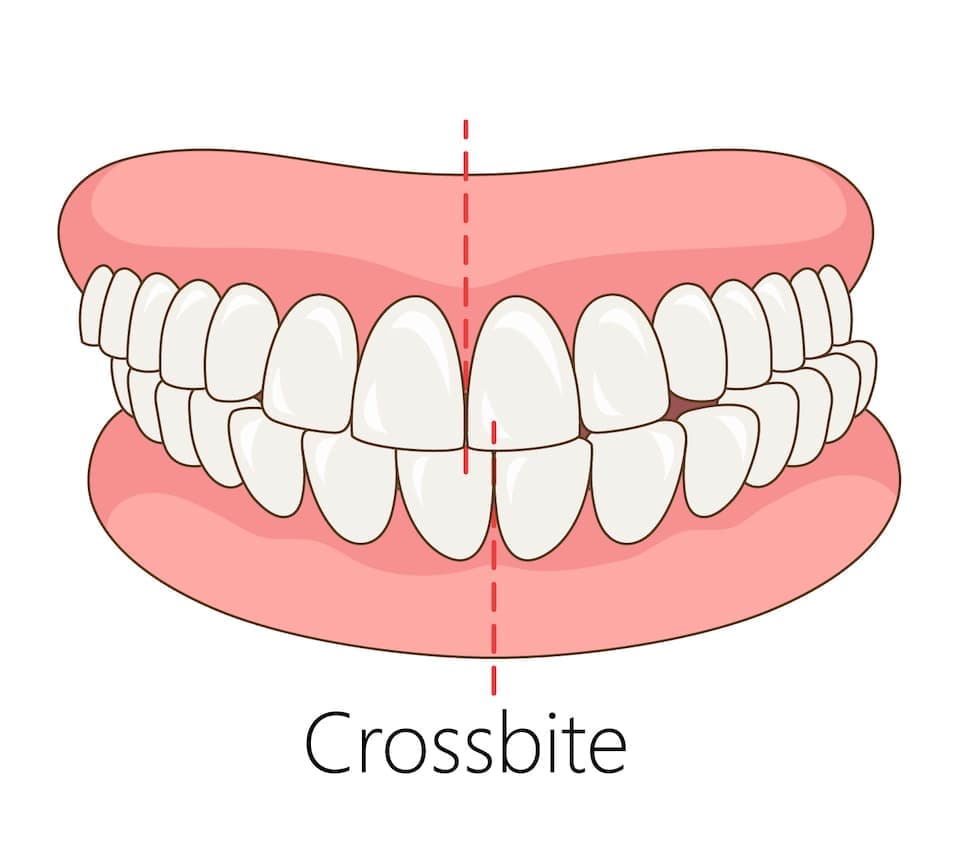
A crossbite is one of the most common orthodontic conditions affecting both children and adults in the UK. It occurs when one or more of the upper teeth sit inside the lower teeth rather than slightly overlapping them, creating an uneven bite that can affect function, comfort, and appearance.
Whether you have noticed that your cross bite teeth do not come together evenly, or you have been told by a dentist that your alignment needs attention, understanding this condition is the first step towards effective treatment.
A crossbite can involve the front teeth, the back teeth, or both. Left untreated, it can contribute to jaw strain, uneven wear, and long-term discomfort. The good news is that crossbite correction is highly effective when addressed with the right approach.
This guide explains what a crossbite is, what causes it, how it is diagnosed, and the full range of treatment options available — from braces and aligners to corrective procedures for more complex cases.
What Is a Crossbite?
In a healthy, well-aligned bite, the upper teeth sit slightly outside the lower teeth when the jaw is closed. This allows for even distribution of biting force and comfortable jaw movement. A crossbite disrupts this relationship.
When someone has cross bite teeth, one or more upper teeth are positioned inside the lower teeth instead of outside them. This can happen on one side of the mouth or both, and it can affect a single tooth or a group of teeth.
An uneven bite like this places unequal pressure on certain teeth and the jaw joints. Over time, this can lead to discomfort, tooth damage, and changes in jaw function. Recognising and addressing a crossbite early can help prevent these issues from progressing.
Key point: A crossbite is not the same as an overbite or underbite. It specifically refers to a lateral or front-to-back misalignment where upper teeth sit inside lower teeth, rather than one jaw protruding ahead of the other.
Types of Crossbites
Anterior Crossbite
An anterior crossbite affects the front teeth. It occurs when one or more of the upper front teeth sit behind the lower front teeth. This is often visible when smiling and can affect the aesthetics of the smile as well as the way the teeth meet when biting.
Anterior crossbites can place strain on the front teeth and may cause chipping, uneven wear, or gum recession over time if left uncorrected.
Posterior Crossbite
A posterior crossbite affects the back teeth. It occurs when the upper back teeth sit inside the lower back teeth on one or both sides. This type is particularly significant because it can cause the jaw to shift to one side when closing, leading to bite imbalance and jaw strain.
Posterior crossbites are often linked to a narrow upper jaw and can affect chewing efficiency, jaw comfort, and long-term tooth wear patterns.
| Type | Location | Common Effects |
|---|---|---|
| Anterior Crossbite | Front teeth | Cosmetic impact, bite strain, chipping |
| Posterior Crossbite | Back teeth | Jaw shift, uneven bite, chewing difficulties |
What Causes a Crossbite?
Crossbites develop for a variety of reasons. Understanding the underlying cause helps guide the most effective treatment approach.
Genetics
The most common cause of crossbite teeth is inherited jaw size and shape. If the upper jaw is naturally narrower than the lower jaw, or if there is a mismatch in jaw growth, the teeth may not align properly. A family history of crossbites or other orthodontic issues increases the likelihood.
Environmental Factors
Certain habits during childhood can affect jaw development and contribute to crossbites forming:
- Thumb sucking – Prolonged thumb sucking places pressure on the upper jaw and can narrow the palate, contributing to a posterior crossbite
- Prolonged dummy use – Extended use of a dummy or pacifier beyond the recommended age can have a similar narrowing effect on the upper jaw
- Mouth breathing – Chronic mouth breathing during childhood can alter facial and jaw development, affecting the way the upper and lower teeth meet
Good to know: In many cases, a crossbite results from a combination of genetic predisposition and environmental factors. Identifying and addressing contributing habits early can make treatment simpler and more effective.
Symptoms of Crossbite
A cross bite does not always cause noticeable symptoms straight away. Some people live with a mild crossbite for years without realising it. However, as the condition progresses or places ongoing strain on the teeth and jaw, the following symptoms may develop:
- Uneven bite – Your teeth do not come together evenly, or you feel that your bite is off-centre
- Jaw pain or discomfort – Strain on the jaw joints from compensating for the misalignment
- Tooth wear – Crossbite teeth meet at unusual angles, leading to accelerated or uneven wear on the enamel
- Headaches – Persistent tension in the jaw muscles can contribute to regular headaches, particularly in the morning
- Speech difficulties – In some cases, crossbites can affect tongue positioning and contribute to slight speech irregularities
Important: Even if you are not currently experiencing symptoms, a crossbite identified during a dental examination should be assessed. Early intervention can help prevent complications from developing later.
Diagnosis and Assessment
Diagnosing a crossbite involves a thorough clinical examination of your teeth, bite, and jaw. Your dentist will assess how your upper and lower teeth meet when your jaw is closed, looking for any teeth that sit inside the opposite arch.
The assessment typically includes:
- Visual alignment check – Observing the position of each tooth relative to the opposing arch to identify any crossbite teeth
- Bite assessment – Asking you to bite down naturally so the dentist can see exactly how your teeth come together and whether the jaw shifts to one side
- Jaw relationship evaluation – Assessing the width and position of the upper and lower jaws to determine whether the crossbite is dental (tooth position) or skeletal (jaw size)
Understanding what is a crossbite and confirming the type is essential before any treatment can be planned. The findings from this assessment guide the choice between orthodontic approaches, and whether additional intervention may be needed.
What Problems Can a Crossbite Cause?
While a crossbite may seem minor, leaving it untreated can lead to a range of complications over time. The uneven bite places abnormal forces on certain teeth and the jaw, which can gradually cause damage.
- Jaw strain and TMJ discomfort – The jaw muscles and joints compensate for the misalignment, which can lead to chronic tension, clicking, or pain in the temporomandibular joint
- Tooth chipping and fractures – Teeth meeting at incorrect angles are more susceptible to chipping, cracking, and premature wear
- Gum recession – Abnormal biting forces can push teeth in directions that stress the gum tissue, leading to recession and sensitivity
- Facial asymmetry – A long-standing crossbite, particularly in growing patients, may contribute to asymmetric facial development
If you are experiencing any of these issues, it is worth having your bite assessed. Maintaining good general dental care alongside orthodontic assessment can help identify and manage these problems early.
How Do You Fix a Crossbite?
The approach to crossbite correction depends on the type, severity, and whether the cause is dental (related to tooth position) or skeletal (related to jaw size). Several effective treatment options are available.
Orthodontic Braces
Fixed braces are one of the most reliable methods for correcting crossbites. They apply continuous, controlled force to move teeth into the correct position over time. Braces are suitable for both anterior and posterior crossbites and can be combined with other appliances for complex cases.
Clear Aligners
For mild to moderate crossbites, clear aligners offer a more discreet alternative. They work by gradually shifting teeth into improved alignment using a series of custom-made removable trays. Not all crossbites are suitable for aligner treatment, so a thorough assessment is important.
Orthodontic Elastics
Elastics (small rubber bands) are often used alongside braces to help correct the bite relationship between the upper and lower teeth. They apply targeted force to guide the jaw and teeth into better alignment, and are particularly useful for posterior crossbite correction.
Corrective Surgery
In severe cases where the crossbite is caused by a significant skeletal discrepancy, corrective jaw surgery may be recommended. This is typically considered only when orthodontic treatment alone cannot achieve the required correction, and is more common in adult patients.
How to fix crossbite effectively depends entirely on the individual case. Your dentist will recommend the most appropriate treatment path after a detailed assessment of your teeth and jaw relationship.
Crossbite Braces Treatment
Crossbite braces are one of the most commonly used and effective approaches for correcting this type of misalignment. Traditional fixed braces use brackets bonded to the teeth and a wire that applies gentle, continuous pressure to move teeth into improved positions.
The treatment duration for crossbite braces varies depending on the complexity of the case. Mild crossbites may require a shorter course of treatment, while more complex cases may take longer.
Correcting Posterior Crossbites with Elastics
When crossbite braces are used to correct a posterior crossbite, elastics are often added to the treatment. These small rubber bands attach to the brackets and apply cross-arch forces that help guide the upper and lower teeth into better alignment.
Wearing elastics as directed is essential for achieving the desired results. Your dentist will provide clear guidance on how and when to wear them throughout your treatment.
Can Invisible Braces Correct Crossbite?
Invisible braces and clear aligner systems can be effective for correcting mild to moderate crossbites, particularly those caused by dental positioning rather than significant skeletal jaw discrepancies.
Aligners work by applying controlled pressure through a series of custom-made trays, each one moving the teeth slightly closer to their target position. For suitable cases, they offer a discreet and comfortable alternative to traditional fixed braces.
However, not all crossbites can be corrected with aligners alone. Severe or skeletal crossbites may require fixed braces, elastics, or surgical intervention for effective crossbite correction.
Important: The suitability of clear aligners for your crossbite can only be determined through a professional assessment. Your dentist will explain which treatment options are viable for your specific case.
Crossbite Surgery
Crossbite surgery is typically reserved for severe cases where the underlying cause is a significant discrepancy in jaw size or position that cannot be corrected through orthodontic treatment alone.
Corrective jaw surgery (orthognathic surgery) involves repositioning the upper jaw, the lower jaw, or both to achieve proper alignment. This is usually carried out in combination with orthodontic treatment — braces or aligners are worn before and after the surgical procedure to fine-tune the tooth positions.
Surgery is more commonly considered for adult patients, as the jaw bones are fully developed and cannot be reshaped through growth modification techniques that may be effective in younger patients.
What Is the Cost of Crossbite Surgery?
The cost of crossbite surgery varies considerably depending on the complexity of the case, the type of surgical procedure required, and whether it is combined with orthodontic treatment. Because each case is unique, costs are discussed on an individual basis following a thorough assessment.
Note: Not all crossbites require surgery. Many can be effectively corrected with braces, aligners, or a combination of orthodontic approaches. Your dentist will always explore the least invasive option first.
Can Adults Fix a Crossbite?
Yes. While crossbites are often identified and treated during childhood, adult orthodontic treatment is highly effective and increasingly common. Many adults seek crossbite correction either because their condition was not addressed earlier or because symptoms have developed over time.
Treatment options for adults include fixed braces, clear aligners, and in more complex cases, corrective surgery. The choice depends on the type and severity of the crossbite.
Treatment time in adults may be slightly longer than in younger patients, as adult bones are fully developed. However, with modern orthodontic techniques, effective correction of crossbites is achievable at any age.
What Happens If Crossbite Is Untreated?
Leaving a crossbite untreated does not necessarily mean immediate harm, but over time the risks increase. The ongoing strain of an uneven bite can lead to cumulative damage that becomes more difficult and costly to address.
- Progressive tooth damage – Teeth in crossbite meet at abnormal angles, leading to accelerated enamel wear, chipping, and potential fractures
- Worsening jaw misalignment – The jaw may continue to compensate for the uneven bite, leading to increasing discomfort and functional problems
- Progressive uneven bite – Without correction, the bite imbalance may worsen as other teeth shift in response to the abnormal forces
You can view examples of orthodontic improvements in our smile gallery, which shows real patient results from a range of dental treatments.
Prevention
While genetic crossbites cannot always be prevented, there are steps that can reduce the risk of crossbites developing or progressing:
- Early orthodontic assessment – Having a child's bite assessed at an early age allows any developing crossbite to be identified before it becomes more complex
- Monitoring jaw growth – Regular dental check-ups allow your dentist to track how the jaw is developing and flag any alignment concerns
- Addressing habits early – Gently discouraging prolonged thumb sucking and dummy use can help support healthy jaw development
Helpful tip: Prevention is always easier than treatment. If you notice any signs of a developing crossbite in yourself or your child, an early assessment can make a significant difference to the outcome.
When to See a Private Dentist in London
If you are experiencing any of the following, it is worth having your bite assessed by a qualified dental professional:
- Difficulty chewing or biting evenly on both sides
- Visible misalignment of your teeth when you bite down
- Jaw discomfort, clicking, or pain when opening and closing your mouth
- Uneven wear on your teeth that you or your dentist has noticed
- A child or teenager showing signs of a developing crossbite
At St Paul's Medical & Dental in the City of London, our experienced GDC-registered dental team can assess your bite, explain your options clearly, and create a personalised treatment plan tailored to your needs.
Frequently Asked Questions About Crossbite
What is a crossbite?
A crossbite is a type of dental misalignment where one or more upper teeth sit inside the lower teeth when the jaw is closed. In a normal bite, the upper teeth slightly overlap the lower teeth. A crossbite can affect the front teeth (anterior crossbite) or the back teeth (posterior crossbite) and may involve a single tooth or multiple teeth.
How to fix crossbite?
A crossbite can be corrected through several orthodontic approaches depending on its severity. Braces are the most common method, using brackets and wires to gradually reposition the teeth. Clear aligners may be suitable for mild to moderate cases. Elastics can help adjust the bite relationship. In severe cases involving jaw discrepancy, corrective jaw surgery may be recommended.
Can invisible braces correct crossbite?
Clear aligners can be effective for correcting mild to moderate crossbites, particularly those caused by dental positioning rather than skeletal jaw discrepancies. The suitability of aligners depends on the type and severity of the crossbite. A thorough assessment is needed to determine whether aligners are the right approach for your specific case.
Do braces fix crossbite?
Yes, braces are one of the most effective and commonly used treatments for crossbite correction. Fixed braces apply controlled force to move teeth into the correct alignment. They can be used alongside elastics to help guide the upper and lower jaws into a more balanced bite relationship.
Is crossbite serious?
A crossbite should not be ignored. While it may not always cause immediate discomfort, leaving it untreated can lead to uneven tooth wear, jaw pain, gum recession, chipping, and facial asymmetry over time. Early assessment and treatment can help prevent these complications from developing.
What causes posterior crossbite?
A posterior crossbite is typically caused by a narrow upper jaw relative to the lower jaw. This can be genetic or influenced by environmental factors such as prolonged thumb sucking, dummy use, or mouth breathing during childhood. These habits can affect the development of the upper jaw and lead to a crossbite forming.
Can adults fix crossbite?
Yes. Adults can correct a crossbite through orthodontic treatment including braces or clear aligners. In more complex cases where the crossbite is caused by a skeletal jaw discrepancy, corrective surgery may be considered. Treatment may take longer in adults than in children, but effective correction is achievable at any age.
Does crossbite require surgery?
Not always. Many crossbites can be corrected with braces, aligners, or elastics alone. Surgery is typically only considered for severe skeletal crossbites in adults where the jaw bones are significantly misaligned and orthodontic treatment alone cannot achieve the required correction.
Concerned About Your Bite?
If you think you may have a crossbite or you are experiencing any of the symptoms described above, our experienced GDC-registered dental team at St Paul's Medical & Dental can help. We offer thorough assessments and clear, honest advice on the best treatment options for your individual case.








